The Biggest Tax Savings Happen Before You File: Tax Planning vs. Tax Preparation

When it comes to taxes, many people think the job begins in January and ends when they file their tax return. The truth is that the biggest tax savings often happen long before tax season arrives. Understanding the difference between tax planning and tax preparation can help you make smarter financial decisions and potentially reduce your tax liability.
What Is Tax Preparation?
Tax preparation is the process of completing and filing your federal and state tax returns using the annual financial information provided after the year is done.
During tax preparation, you or your tax professional gathers documents such as:
Forms W-2
Forms 1099
Mortgage interest statements
Investment income statements
Business income and expense records
Charitable contribution receipts
Other tax-related documents
Once all the information has been collected, your tax return is prepared and filed accurately with the appropriate tax authorities.
Think of Tax Preparation Like This:
Tax preparation is like taking a final exam. Once the test begins, your answers are based on what you've already learned and done. At that point, there is very little you can change.
The same is true with your taxes. After the tax year ends, most financial decisions have already been made, limiting opportunities to reduce your tax bill.
What Is Tax Planning?
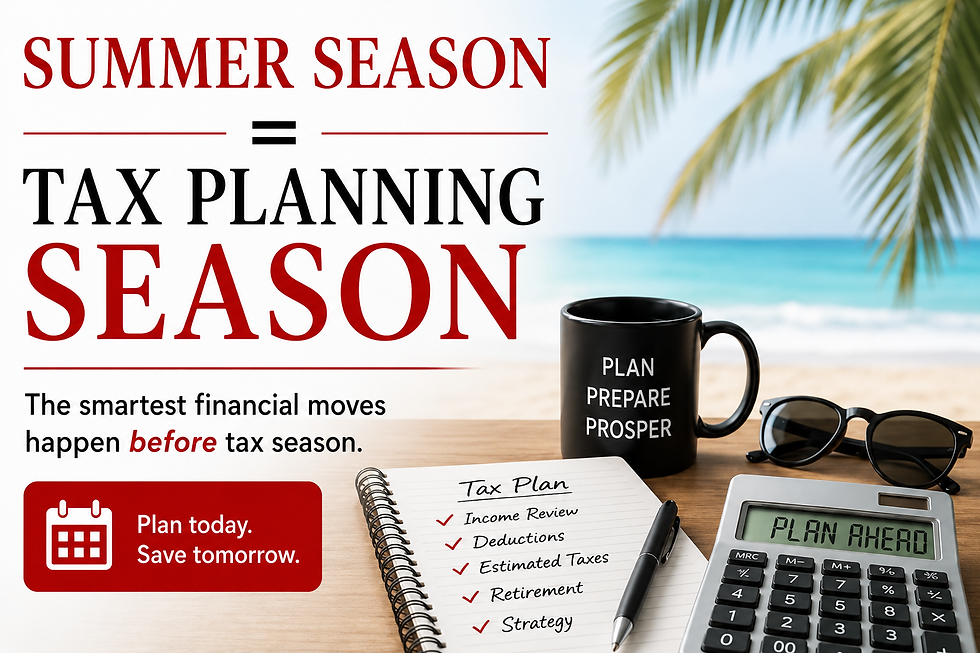
Tax planning is the proactive process of making financial decisions throughout the year with the goal of minimizing taxes while supporting your long-term financial objectives.
Instead of looking backward, tax planning looks forward.
It involves analyzing your current financial situation and projecting the future of that situation to possible identify tax savings strategies before the end of the tax year.
Examples of tax planning strategies include:
Adjusting payroll tax withholding
Making retirement contributions
Timing business equipment purchases
Tracking deductible business expenses
Planning estimated tax payments
Maximizing available tax credits
Reviewing investment gains and losses
Choosing the most beneficial business entity
Planning charitable contributions
Preparing for major life changes such as marriage, divorce, or retirement
Tax planning helps ensure you're making informed decisions before deadlines pass.
Key Differences
Tax Planning | Tax Preparation |
Happens throughout the year | Happens after the tax year ends |
Focuses on reducing future taxes | Focuses on accurately filing returns |
Proactive approach | Reactive approach |
Helps guide financial decisions | Reports completed financial activity |
May reduce future tax liability | Calculates taxes already owed or refunded |
Why Tax Planning Matters
Many taxpayers unintentionally pay more taxes than necessary simply because they wait until tax season to look at their financial situation and seek professional advice.
By then, many opportunities to legally reduce taxes have already passed.
Year-round tax planning allows you to:
Avoid unexpected tax bills
Improve cash flow
Prepare for major purchases
Reduce penalties
Make informed business decisions
Increase retirement savings
Take advantage of available deductions and credits
Better understand how financial decisions affect your taxes
For business owners, tax planning can be especially valuable when making decisions about hiring employees, purchasing equipment, expanding operations, or selecting the right business structure.
Who Benefits From Tax Planning?
Tax planning isn't just for large corporations or wealthy individuals.
It can benefit:
Employees
Self-employed professionals
Small business owners
Freelancers
Gig workers
Independent contractors
Retirees
Investors
Growing families
Anyone experiencing major financial changes
Even small adjustments made throughout the year can have a meaningful impact when it's time to file your return.
Make Taxes Part of Your Financial Strategy
Instead of viewing taxes as a once-a-year obligation, think of them as an important part of your overall financial strategy.
You can do this by simply reviewing your financial situation and/or meeting with a tax professional during the year. This provides opportunities to review your financial goals, evaluate tax-saving strategies, and make informed decisions before deadlines arrive.
When tax season comes, preparation becomes much easier because you've already taken steps throughout the year to position yourself for success.
Remember the best way to plan for tomorrow is to acquire as much information as you can today.


Comments